
The 1940 classic film The Blue Bird is considered a landmark in the history of film. It was the first Technicolor feature-length film to be produced, directed, and released to a wide audience. The film is based on the play of the same name by Maurice Maeterlinck and follows the story of a young girl named Mytyl who embarks on a magical journey to find the Blue Bird of Happiness. Although it was groundbreaking in its own right, The Blue Bird was Fox’s response to MGM’s The Wizard of Oz and the studio’s attempt at making its own fantasy adventure film with its proven child hit maker, Shirley Temple.
The Blue Bird starred Shirley Temple as Mytyl and Johnny Russell as her little brother, Tyltyl and is set in Germany during the time of the Napoleonic Wars. Mytyl is an ungrateful brat whose father is drafted to go to war, an unlikely character for Shirley Temple who had always been cast as the good girl. The night before her father is to leave for war, Mytyl has a strange dream in which she and her brother were tasked to seek out the Blue Bird of Happiness. The journey takes them through a fantastical land, culminating in a visit to the land of unborn children. Mytyl’s adventured help her see the world from different perspectives. When she wakes in the morning, she is a changed girl. She is more appreciative and kinder than she was … and a truce has been declared so her father was spared his military duty.

One of the prevailing myths of the Golden Age of Hollywood was that Shirley Temple was originally tapped to play Dorothy in The Wizard of Oz. That’s not entirely true. Although her name was brought up for the role, her singing voice failed to impress the producers of The Wizard of Oz. MGM’s own up-and-comer Judy Garland had much stronger singing chops. It was a moot point because twelve-year-old Shirley was under contract with Fox, and they nixed the idea of loaning their hit maker to another studio. But when the execs at Fox saw the huge success of The Wizard of Oz, they went to work to create their own fantasy film. They adapted The Blue Bird from a play by the same name that was written by Maurice Maeterlinck in 1909.
Taking a page from The Wizard of Oz’s playbook, The Blue Bird’s opening scenes were shot in black and white. The film switched to color during the dream fantasy portion. The Blue Bird was the first feature-length film to make use of the new Technicolor process. This process allowed for beautiful, vibrant images to be captured on film for the first time. Prior to this, all films were shot in black and white. The Blue Bird‘s use of color was revolutionary and gave the film a unique visual style that has never been replicated.
The Blue Bird‘s use of color also allowed for its innovative special effects. For example, in one scene Mytyl and her brother Tyltyl travel through a forest where the trees are made of crystal and the leaves are made of gold. The use of color allows these effects to be captured in a way that would not have been possible with black and white photography.
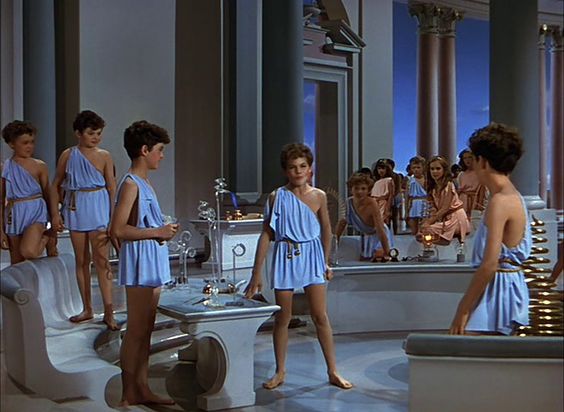
The film’s pioneering use of color and innovative special effects had a huge impact on the film industry. Many filmmakers were inspired by the film and began to experiment with color photography and special effects. As a result, the use of color and special effects became more common in films and eventually became a mainstay of the industry. The Blue Bird also helped to popularize the use of Technicolor. The success of the film led to the founding of the Technicolor Corporation in the United States, which went on to become one of the most influential companies in the film industry. It is no wonder, then, that The Blue Bird was nominated for two Academy Awards, in the Best Cinematography and Best Visual Effects categories.
The Blue Bird was a box office flop when it was released, in part because the subject matter was deeper and darker than audiences expected. Decades after it debuted, however, fans took a closer look at the film and hailed it for the groundbreaking production that it was. Although it never reached the icon status to rival The Wizard of Oz, The Blue Bird has a place in cinematic history. As the first Technicolor feature-length film, it demonstrated to all of Hollywood that use of color and innovative special effects was the future of the film industry, and its narrative and use of music have helped it to remain a sleeper classic for many years.