During the Golden Age of Hollywood, director Cecil B. DeMille had a reputation for large-scale film productions with grand sets, elaborate costumes, impressive visual effects, and massive casts. For his 1952 film, The Greatest Show on Earth, DeMille pulled out all the stops to bring the dazzling and eye-popping spectacle of the traveling circus to the big screen. The Greatest Show on Earth was a great achievement of cinematic production, with a revolutionary widescreen filming technique, technological use of color, and the sheer size of the project, but it was the star-studded cast that really made The Greatest Show on Earth a great film and one that was worthy of the Best Picture Oscar at the 25th Academy Awards Presentation. Just who was in this movie? And who wasn’t? Let’s find out.
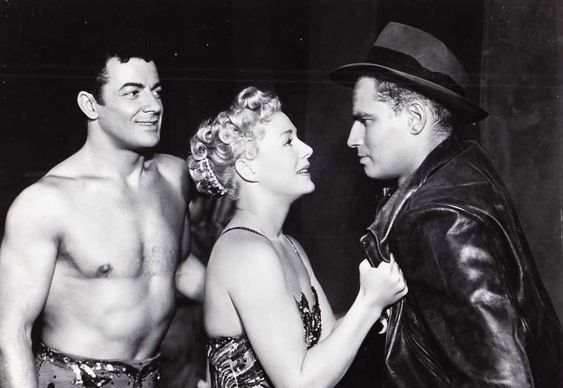
Charlton Heston
Long before his epic performances in Ben-Hur and The Planet of the Apes, Charlton Heston starred as the no-nonsense circus manager in The Greatest Show on Earth. In fact, this is considered to be Heston’s breakout role that helped launch him to stardom. According to his later accounts, Heston had been driving through the parking lot of Paramount Pictures when he spied Cecil B. DeMille. Although he had never met the famous director, Heston gave him a friendly wave. DeMille was impressed and intrigued. He asked around to find out who the mysterious waver was … and ended up casting him in The Greatest Show on Earth.
James Stewart
Cast in the role of Buttons the Clown, actor James Stewart wore his clown makeup in every scene he was in. That’s because his character was hiding a dark past.
Betty Hutton
To convincingly play the trapeze artist, Holly, Betty Hutton was required to learn and perform many of her own stunts. By all accounts, she enjoyed the experience and mastered a few impressive moves. There was, however, some cinematic magic going on. For the high-wire scenes, a real circus aerialist was used as a stunt double. Even in the close-up shots when it is clearly Hutton performing the tricks, the actress was really only a few feet off the ground. Camera angles made it seem like she was high in the air.
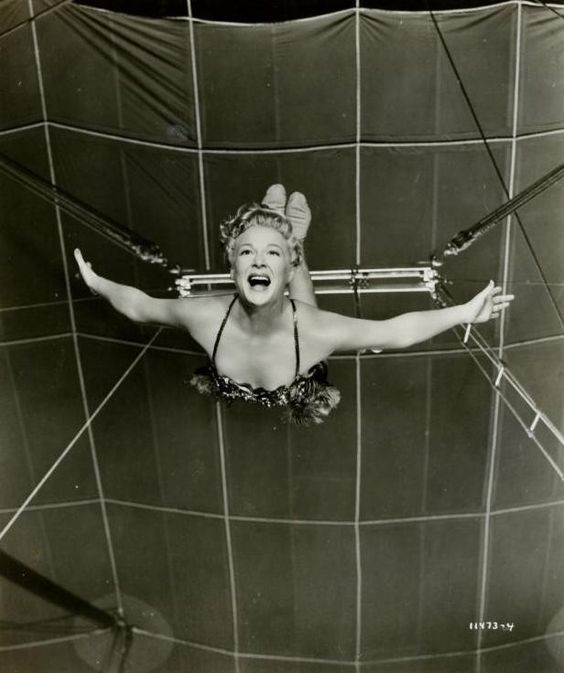
Cornel Wilde
For the role of The Great Sebastian, actor Cornel Wilde was also tasked with learning some aerial moves. He didn’t embrace the challenge in the same way that Betty Hutton did. Wilde was afraid of heights so he had to overcome his phobia before he could film the trapeze scenes.
Dorothy Lamour
Dorothy Lamour appeared as a singer, Phyllis, in The Greatest Show on Earth sandwiched between roles in the popular Road to… series of films. Lamour had built her Hollywood career by playing sexy, sultry characters, but DeMille pushed her outside her comfort zone by casting her as a ditzy, vulgar singer. This marked the first film in which Lamour had a chance to show off her comic skills and range as an actress. She later commented that when she initially read the script for The Greatest Show on Earth, she thought it sounded hokey. But she was amazed at DeMille’s ability to transform it into the glimmering spectacle that it was.
Gloria Grahame
Gloria Grahame played the elephant trainer, Angel, in the film. Grahame had come from a background as a serious dramatic actress before taking the role in The Greatest Show on Earth and she returned to dramatic roles afterwards. But Rodgers and Hammerstein took note of her performance in the movie when they were casting the film version of their hit musical, Oklahoma! a few years later. They tapped Grahame for a role in that film … her one and only musical performance.
Bob Hope and Bing Crosby
Cecil B. DeMille certainly knew how to excite his audiences. While filming The Greatest Show on Earth, he invited several entertainers to stop by for uncredited cameo appearances. In one scene, moviegoers see Bob Hope and Bing Crosby as members of the circus audience. The two popular performers were Dorothy Lamour’s costars in the Road to… films.
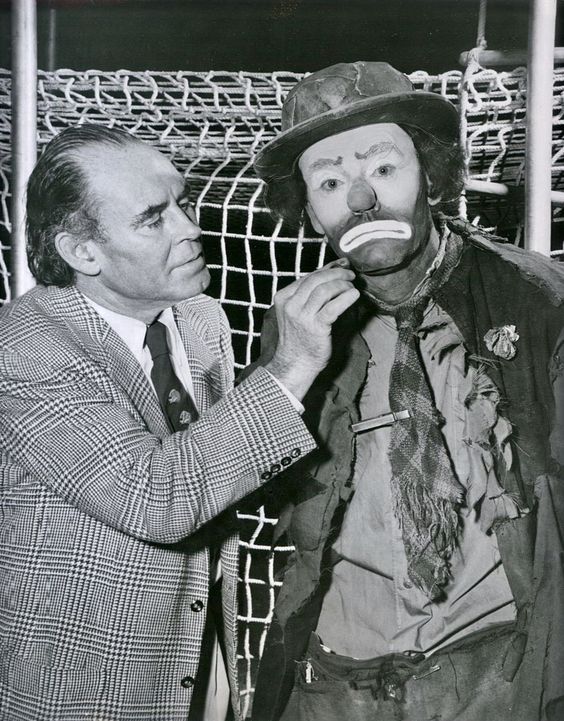
Emmett Kelly
World famous circus clown Emmett Kelly, famous for his sad face, appeared in The Greatest Show on Earth. If you look closely, you’ll see Kelly give an uncharacteristic hint of a smile at the end of the trampoline scene.
John Ringling North
Cecil B. DeMille relied heavily on the real-life performers of the Ringling Bros. and Barnum & Bailey’s Circus while filming The Greatest Show on Earth. In fact, more than 1,400 members of the circus troupe, along with hundreds of animals, were featured in the film. Among them was John Ringling North, then president of the Ringling Bros. and Barnum & Bailey’s Circus.
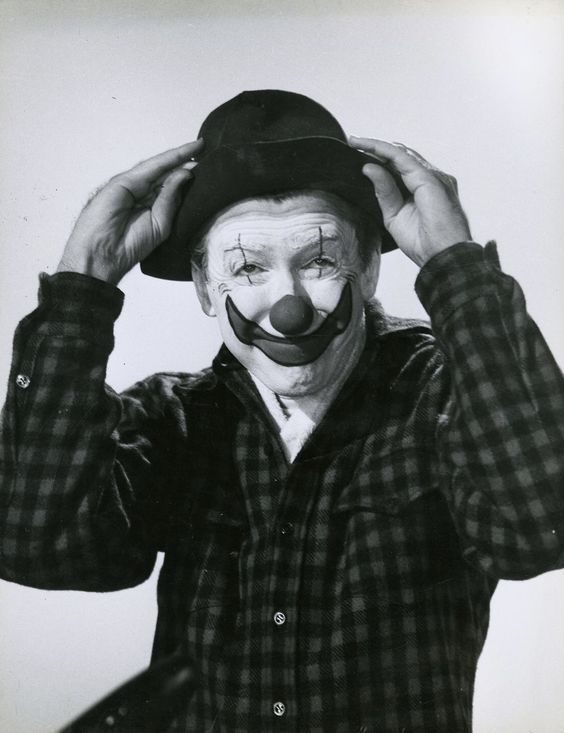
William Boyd
If the name William Boyd doesn’t sound familiar, perhaps you will recall his most famous character, Hopalong Cassidy. Boyd appeared in the film in his popular cowboy persona as a personal favor to DeMille. Twenty-five years earlier, DeMille cast Boyd in his 1927 production of The King of Kings, which kickstarted Boyd’s career.
Who Wasn’t in The Greatest Show on Earth
Lucille Ball and Paulette Goddard
Cecil B. DeMille initially wanted Lucille Ball to play the role of Angel. Ball, however, had just learned that she was pregnant with her daughter, Lucie, and therefore couldn’t do the stunts required in the movie. DeMille also considered actress Paulette Goddard for the role, but eventually settled on Gloria Grahame.
Hedy Lamarr and Marlene Dietrich
Both Hedy Lamarr and Marlene Dietrich were in the running to play the lead character, Holly, in The Greatest Show on Earth. Betty Hutton so wanted the role that she sent DeMille a massive, expensive floral arrangement adorned with the image of herself on a trapeze swing. DeMille finally agreed to give her the role on one condition … she had to slim down her hips.
Kirk Douglas and Burt Lancaster
Burt Lancaster, who was a real-life circus acrobat in the 1930s, made the short list for the role of The Great Sebastian. Kirk Douglas was also in the running, but both men lost out to Cornel Wilde. Both Lancaster and Douglas got second chances to portray trapeze artists on the big screen. Lancaster starred in the 1956 film, Trapeze, and Douglas appeared as a trapeze artist in The Story of Three Loves in 1953.